
| Quick Facts | Details |
| Common Name | Reed Root, Common Reed Rhizome |
| TCM Name | Lu Gen (蘆根) |
| Scientific Name | Phragmites communis |
| Key Benefits | Clears Lung Heat, Generates Fluids, Relieves Nausea |
| Best For | Dry coughs, dehydration, hangovers, mild fevers |
Table of Contents
1. Why You Need “Nature’s Water Filter”
Did you know that reeds act as a natural filtration system for river ecosystems? Just as they purify water in nature, Reed Root (Phragmites Rhizome) works to cleanse and hydrate the human body. In Traditional Chinese Medicine (TCM), this herb is known as Lu Gen, a go-to remedy for cooling down the body, clearing “heat” from the lungs, and replenishing lost fluids.
If you struggle with a dry throat, lingering coughs from pollution, or dehydration after a night out, this ancient root might be your new best friend.
2. Top 3 Health Benefits of Reed Root
① Respiratory Support & Lung Detox
Reed Root is famous for its “cooling” properties. It targets the lungs to clear internal heat and inflammation. This makes it excellent for soothing dry coughs, sore throats with thick yellow phlegm, and respiratory irritation caused by wildfire smoke or urban pollution.
👉 Read More: Natural Ways to Boost Your Immune & Respiratory System
② Deep Hydration & Hangover Relief
Unlike water which simply passes through, Reed Root helps the body generate fluids (Body Fluid Generation). It effectively quenches extreme thirst and resolves dehydration. This mechanism also makes it a powerful natural remedy for hangovers, helping to flush out alcohol toxins and settle a queasy stomach.
👉 Read More: Detox Your Body: The Ultimate Guide
③ Stomach Soothing & Anti-Nausea
In TCM, Lu Gen is used to treat “Stomach Heat,” which manifests as bad breath, swollen gums, or nausea/vomiting. It calms the stomach and stops vomiting, making it a gentle remedy for digestive upset.
3. TCM Wisdom: The Power of “Lu Gen”
“Sweet, cold, and attributive to the Lung and Stomach channels. It clears heat, generates fluids, and stops vomiting.”
— Materia Medica
Ancient wisdom categorizes Lu Gen as a “Heat-Clearing” herb. It doesn’t just suppress symptoms; it addresses the root cause of dryness and inflammation in the body.
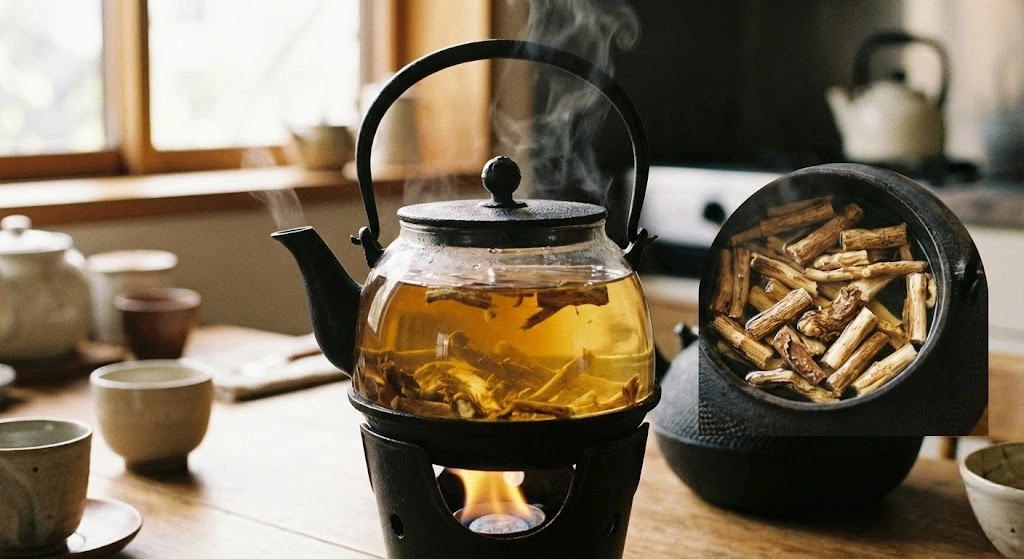
4. How to Make Reed Root Tea (Simple Recipe)
Since the root is fibrous, it needs to be simmered properly to extract its healing properties.
[Ingredients]
- Dried Reed Root (Lu Gen): 30g (approx. 1 oz)
- Water: 2 Liters (approx. 8 cups)
- Optional: A slice of Ginger or Jujube (to balance the cooling nature)
[Instructions]
- Rinse: Wash the dried roots thoroughly under cold water.
- Soak: Let them soak in water for 20-30 minutes for better extraction.
- Simmer: Bring the water to a boil, then reduce heat to low. Simmer for 40–60 minutes.
- Serve: Strain the roots. Drink warm or chilled. It has a mild, sweet, and earthy taste similar to corn silk tea.
5. Safety & Side Effects
- Cooling Nature: Because Reed Root is “cold” in nature, those with a “cold” constitution (e.g., people who easily get diarrhea or have cold hands/feet) should consume it in moderation or pair it with warming herbs like ginger.
- Sourcing Matters: Reeds absorb toxins from their environment. Always buy organic or lab-tested Reed Root from reputable herbal suppliers to avoid heavy metals or pesticides.
6. Conclusion
Whether you’re looking to detox from city smog, recover from a flu, or simply hydrate better, Reed Root (Lu Gen) offers a gentle, time-tested solution. Embrace the cooling power of nature today.
🎁 Special Offer: Join the Exclusive Waitlist
We are curating a fresh batch of our Premium Korean Herbal Selections for our global community.
Don’t miss out! Join our exclusive waitlist today and be the first to know when our premium stock arrives.
🌿 Want to try the finest natural herbs?
Sign up now and get a $3 OFF coupon instantly delivered to your inbox for your first order!
👉 Click Here to Get Your Coupon
🔒 100% Secure. Join other health enthusiasts waiting for the next drop.
7. FAQ
Q1. Can I drink this every day?
A. It is generally safe for short-term use to clear heat. However, due to its cold nature, it’s best to stop once symptoms (thirst, cough) improve.
Q2. Is it safe for pregnancy?
A. While not toxic, its cooling property suggests caution. Consult your healthcare provider or a licensed acupuncturist before use during pregnancy.
Q3. What does it taste like?
A. It has a very mild, slightly sweet, and grassy flavor. It is not bitter, making it easy to drink as a water substitute.
8. Author Box
🍵 Written by The Tea & Herb Curator
Bridging ancient Eastern wisdom with modern wellness. ensuring you get the most accurate and practical health information.
9. Disclaimer
- This content is for informational purposes only and is not medical advice. Consult a doctor before starting any new herbal regimen.